
The Slightly Irreverent Traveler’s Guide to Psilocybin: What To Expect When Journeying
What Actually Happens When You Journey
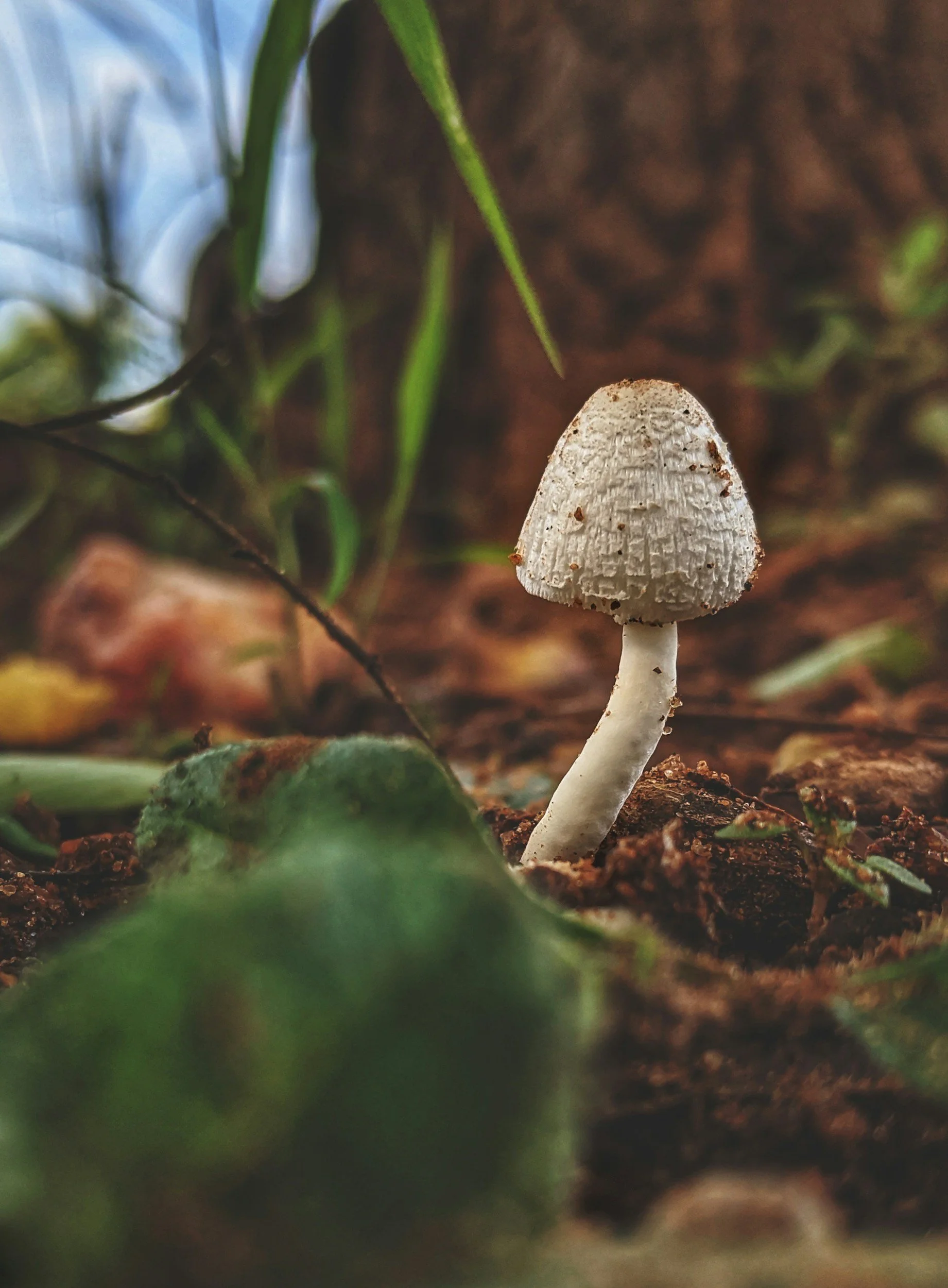
“ I may not have gone where I intended to go, but I think I have ended up where I needed to be.”
— Douglas Adams
At some point, curiosity becomes commitment.
You’ve done the research. You’ve had a thoughtful screening. There are no contraindications such as bipolar disorder or active psychosis. A qualified practitioner has cleared you. A trained guide will be present. You’re not chasing an escape — you’re stepping toward healing.
So… what happens next?
In psychonaut language, you’ve received your boarding pass.
Let’s walk through what the terrain can look like.
1. What does psilocybin actually feel like?
Psilocybin (the active compound in “magic mushrooms”) temporarily alters perception, emotion, and sense of self. The intensity depends on dosage, mindset, physical health, and environment — what we call set and setting.
You may notice:
Colors appearing brighter, layered, or patterned
Geometric imagery or flowing visual forms
A stretching or bending of time (minutes feeling like hours, or vice versa)
Heightened sensitivity to sound and music
Emotional amplification — joy, grief, awe, fear, insight
Crossed senses (such as “seeing” music or “hearing” color)
A softening or temporary dissolution of ego boundaries
A sense of unity with nature, the cosmos, or something greater than yourself
Some describe feeling as though they are plant, animal, earth, or light. Others experience profound stillness. Many report a mystical or spiritually meaningful dimension.
Not every journey looks dramatic. Sometimes it is subtle and deeply internal.
2. When does it begin?
Onset typically occurs between 20–60 minutes after ingestion. Preparation method matters — tea, whole mushrooms, capsules, or chocolate may alter timing slightly.
Early sensations can include:
A wave-like body sensation
Tingling or warmth
A shift in visual clarity
A gentle sense of “something beginning”
If nothing noticeable happens after about an hour (and your practitioner agrees), a booster dose may be considered.
Patience helps. This is not a sprint.
3. Are there side effects?
The most common physical side effect is nausea. This often depends on preparation method and whether you’ve eaten beforehand. Many people do best with a light, simple meal earlier in the day — fruit or toast, for example.
Other possible temporary effects:
Mild anxiety at onset
Temperature sensitivity
Changes in coordination
Fatigue after the experience
With proper screening and support, these effects are usually manageable and short-lived.
4. What about a “bad trip”?
This is the question everyone asks.
Challenging moments can arise — difficult memories, grief, fear, long-avoided emotions. But labeling them as “bad” often misses the point.
Psychedelic experiences can surface material that has been stored in the nervous system — unresolved trauma, attachment wounds, unprocessed loss. When this material emerges in a safe, supported setting, it can be metabolized rather than avoided.
The key difference between overwhelm and healing is containment.
With a trained guide — particularly one with mental health expertise — intense moments can become transformative rather than destabilizing. Moving toward what arises, with curiosity and support, often unlocks integration and relief.
Healing is not always comfortable. But it can be deeply liberating.
5. Microdose vs. Macrodose: What’s the difference?
Microdose
A microdose is a very small amount (often around 0.1–0.3 grams of dried mushrooms, depending on individual sensitivity). It is typically sub-perceptual — meaning you do not experience overt psychedelic effects.
People often report subtle improvements in:
Mood
Focus
Creativity
Emotional resilience
It is not a journey — it is more of a gentle nudge.
Macrodose
A macrodose (often 2–5 grams or more, depending on experience level and goals) induces a full psychedelic state. This may include:
Altered perception
Emotional catharsis
Mystical or unity experiences
Deep introspection
Visual phenomena
Macrodosing is best approached intentionally and with qualified support.
Why people choose this path
Research and clinical experience suggest psilocybin may support relief from depression, anxiety, PTSD, and existential distress. Many individuals report increased wellbeing that can last for months after a single supported session. Others find renewed creativity, spiritual insight, or clarity around life direction.
As Terence McKenna famously suggested, courage matters in this work. Commitment often precedes breakthrough.
If you’re considering a supported psychedelic experience in Colorado, preparation and professional guidance matter.
I am a licensed mental health therapist with over 24 years of clinical experience and a trained, certified psychedelic-assisted therapist. I am also a licensed Plant Medicine Facilitator (in training) under Colorado’s Natural Medicine framework. My work integrates trauma-informed care, psychological expertise, and careful preparation and integration support.
If you would like to explore whether this work is appropriate for you, you can schedule a consultation here: https://calendly.com/monica-ramunda/15min.
